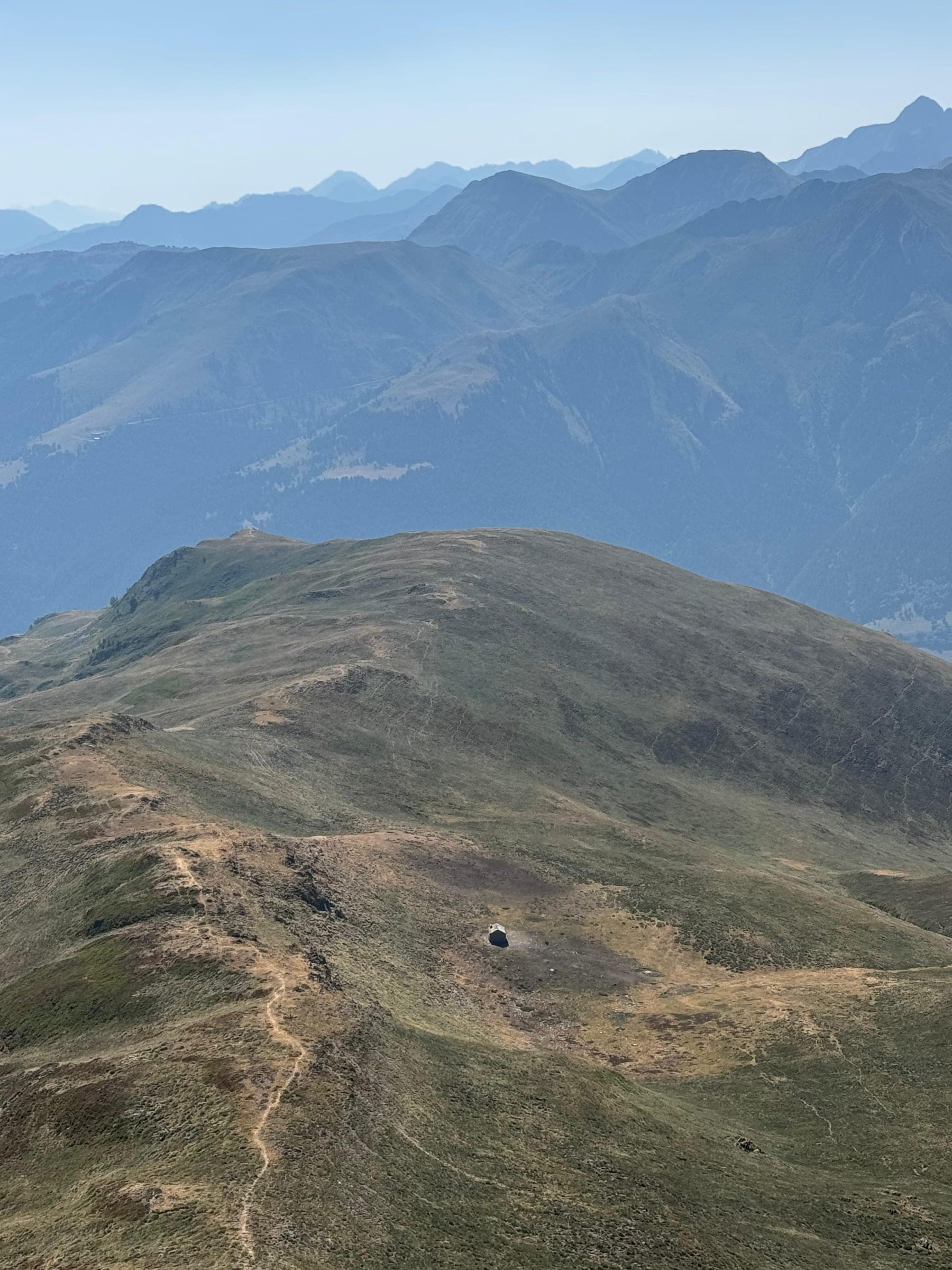
I come to the Val d'Aran every summer, and every summer it fascinates me just the same. These are my days of climbing, running and riding without rest, because everything here invites you to move. People live for sport, and even if you don't practice it yourself, you understand it — you're sharing a place built for exactly that. With summits, passes and walls a step from the door, the day seems to stretch longer than it should. The baseline unit of training here is enormous, and it's in places like this that the urge to do bigger things is born.
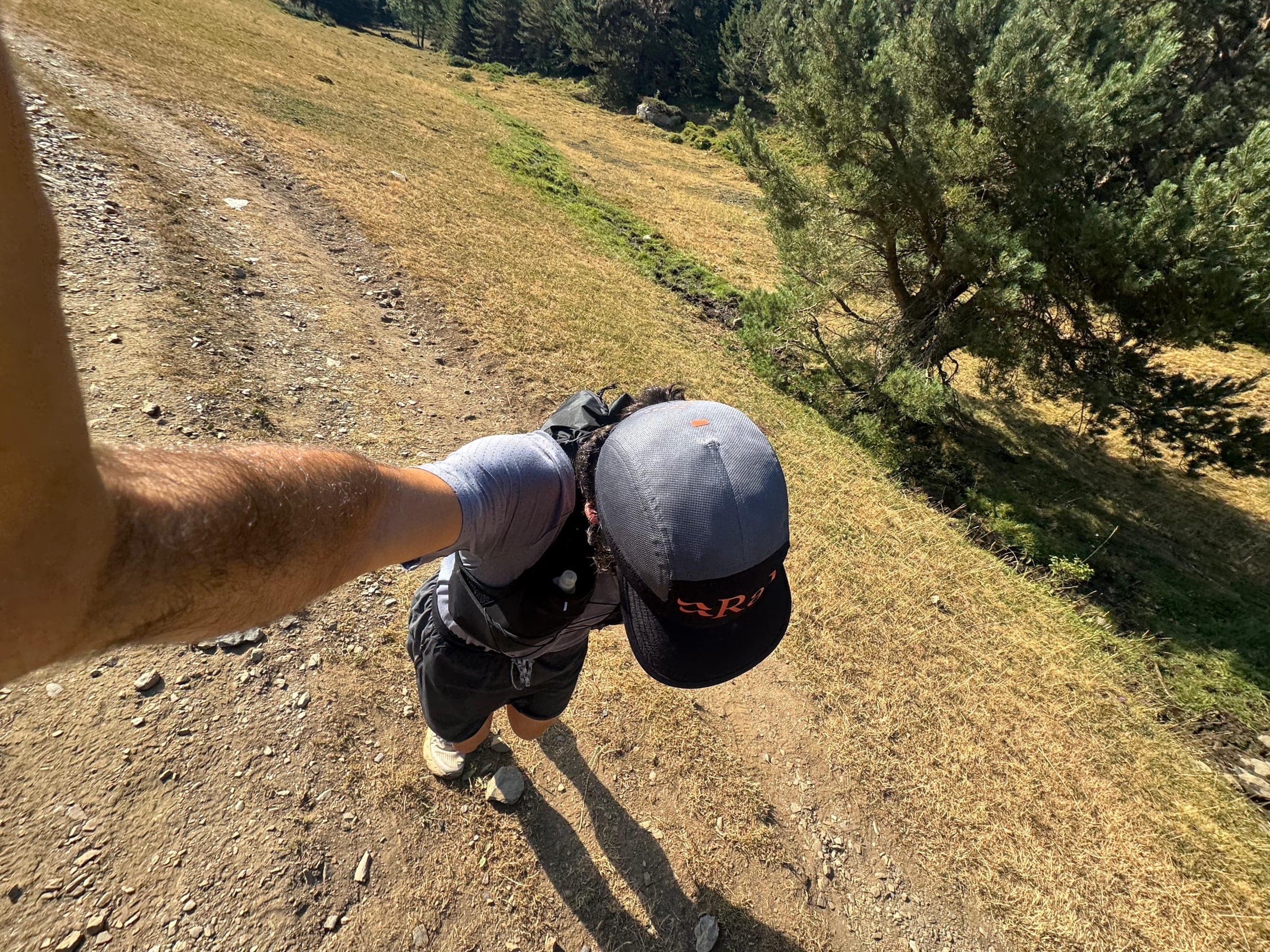
I set off around seven. It's cold for July, and the low clouds are still clinging to the bottom of the valley, like every morning, but the sun is already coming up and you can tell it's about to take over. I carry just enough: three gels, two dates, one bar, and a single 750ml soft flask. A good friend, a climber, once told me that in the Pyrenees in summer you'll never run short of water, and that I should never carry more than I need. It's an idea I brought over from climbing — that world where you cut the tags off your clothes and trim the excess hem off your pants so you're not carrying a single extra gram.
The first kilometer is asphalt, and it lies to you. In Gausac the track turns to trail, and the trail starts climbing without any warning. Up to the Bassa d'Oles you can still jog in stretches. There the terrain gives you half a kilometer of truce, and then the wall arrives: 500 meters of vert in a little over one kilometer of distance, with ramps hitting 38%. Nobody runs there. You climb with your hands on your knees, looking two meters ahead. I pass three people who don't seem to be enjoying the suffering on that slope quite as much as I am. Even complaining about being there, I find them oddly fascinating — I suppose the same way anyone reading this thinks I'm the crazy one.
“Nobody runs there. You climb with your hands on your knees, looking two meters ahead.”
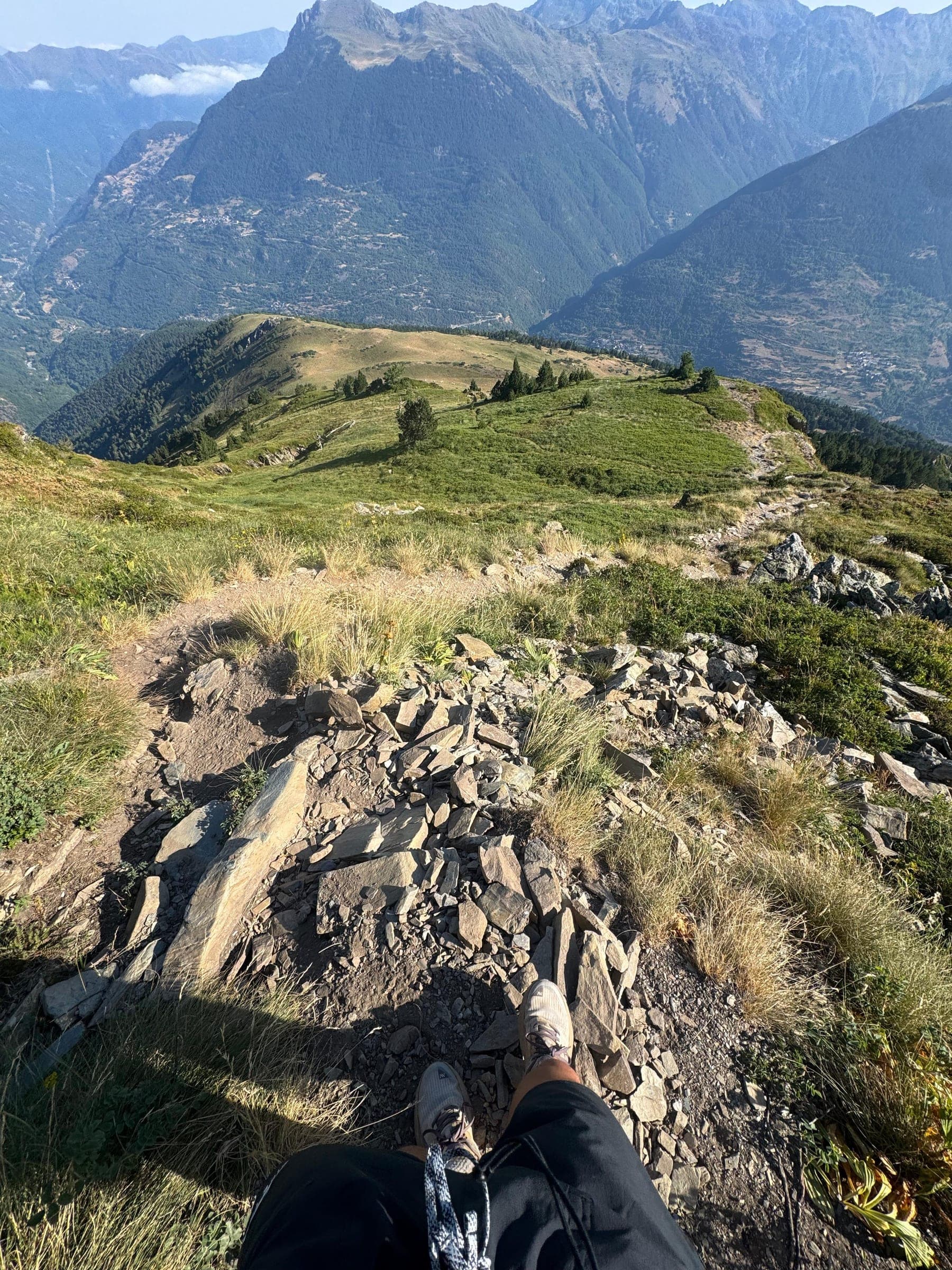
The antenna at Moncorbison (2,173 m) arrives all at once. The ridge toward the Tuc de Letassi finally lets you breathe and look around: the whole Aran valley below, and the line of summits marking the way forward. A gang of crows keeps me company, and right along the ridge three enormous vultures pass by — from up there, having them a few meters away, they look the size of a car. I drop into a col and climb again, legs starting to complain, up to the Montpius, at 2,270 m, the high point of the day. From here I get an incredible natural balcony looking out over the Maladeta massif, home to the Aneto and its glacier, shrinking a little more every year.
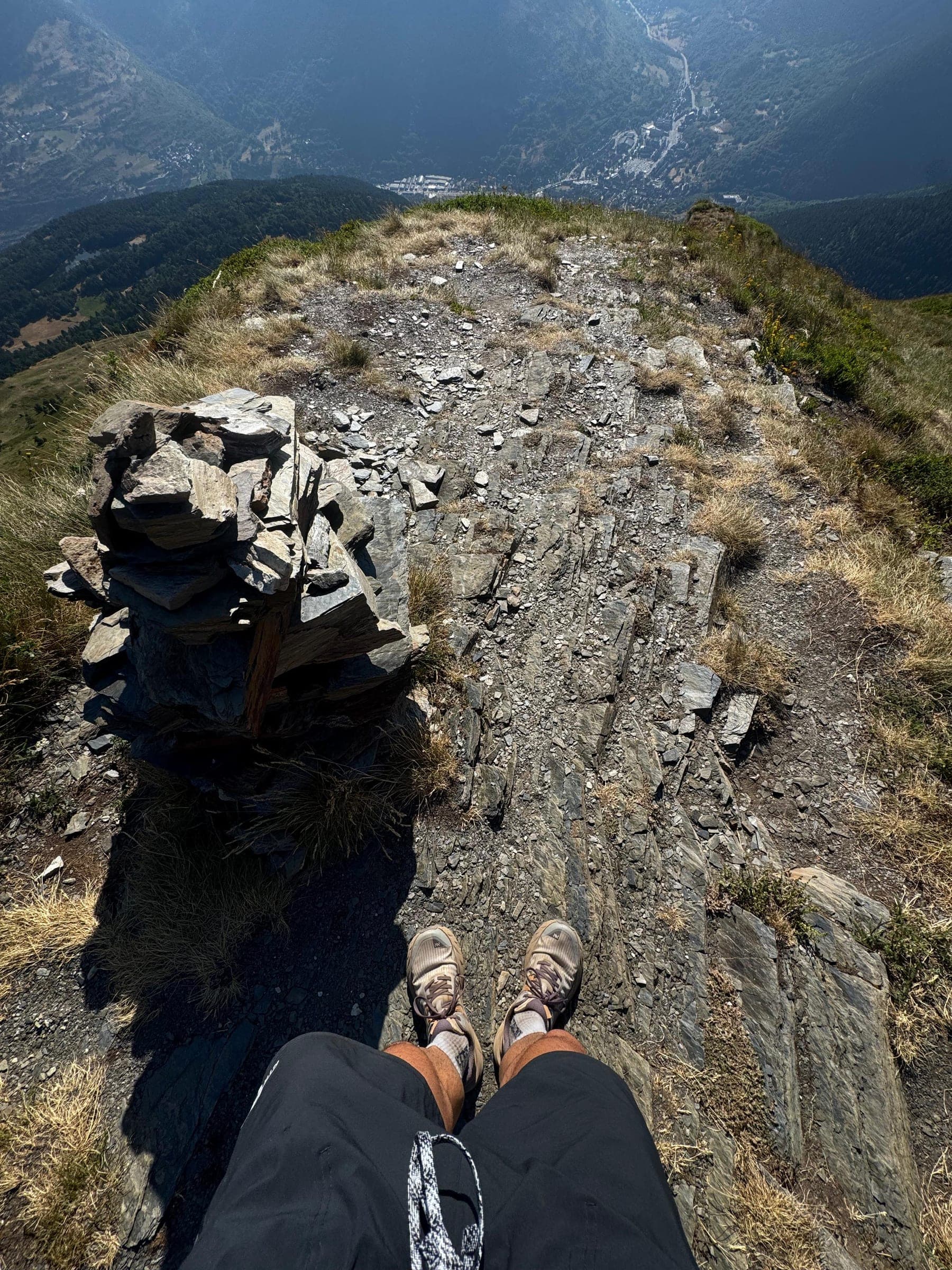
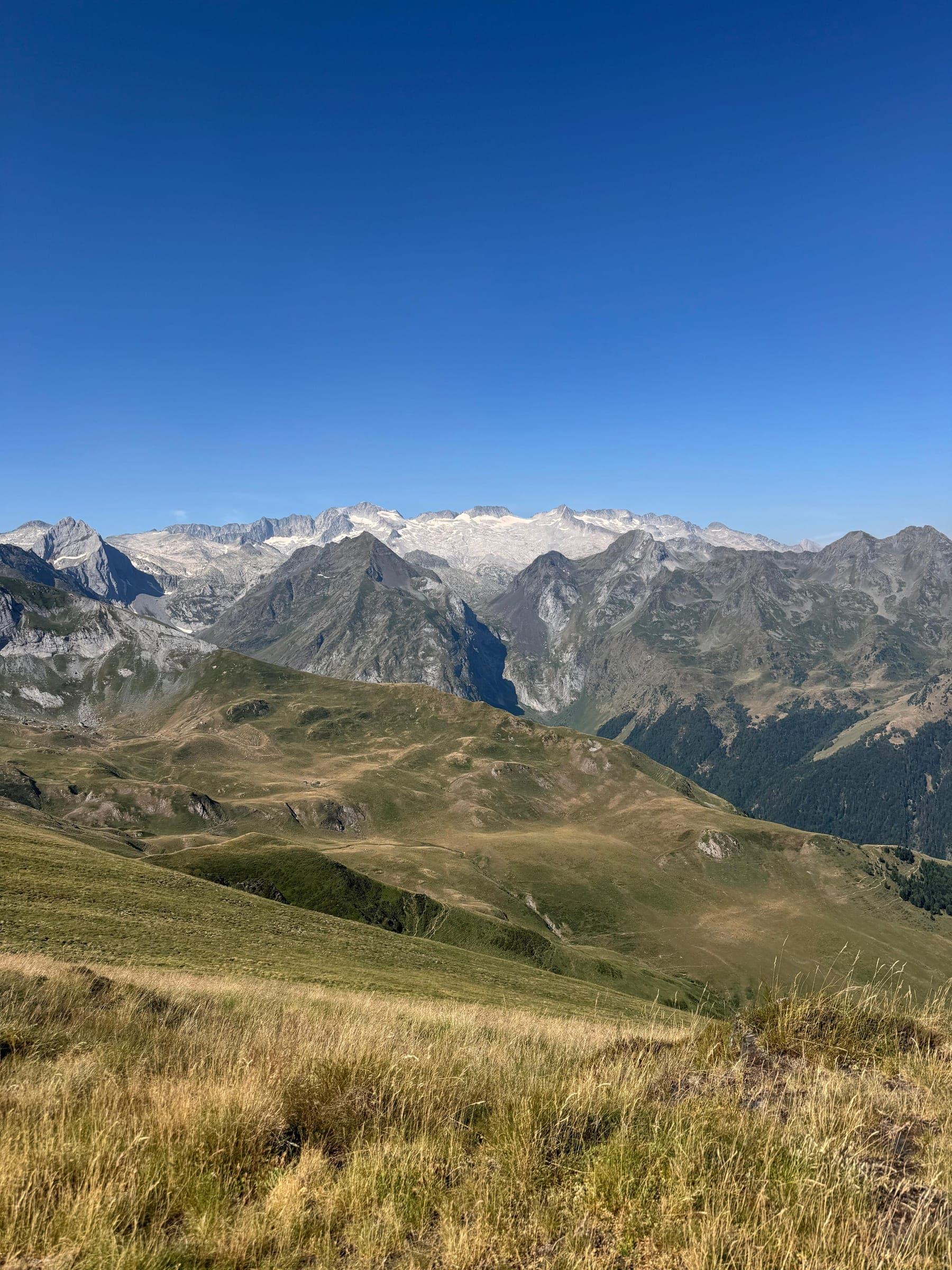
Up there, there's no water left — not in the flask, not on the mountain. Ridge-running at this altitude, there are no springs, and for three long hours I think a lot about my friend and his advice. Fueling is going fine. I take most of the gels more out of scientific obligation than because my body's asking for them, even if they feel like fuel in the tank.
Then comes the best stretch — a high plateau where you can finally run, and the only company are a few shepherds with their flocks. After that, it's time to pay up: 700 meters of descent in under four kilometers, broken terrain and grades that force you to brake. Even so, I go down smiling, bouncing from rock to rock. The balcony trail across the hillside frees up the legs, and the final stretch into Vielha goes fast, already smelling the village, where I finally found a stream to drink from.
“I go down smiling, bouncing from rock to rock.”
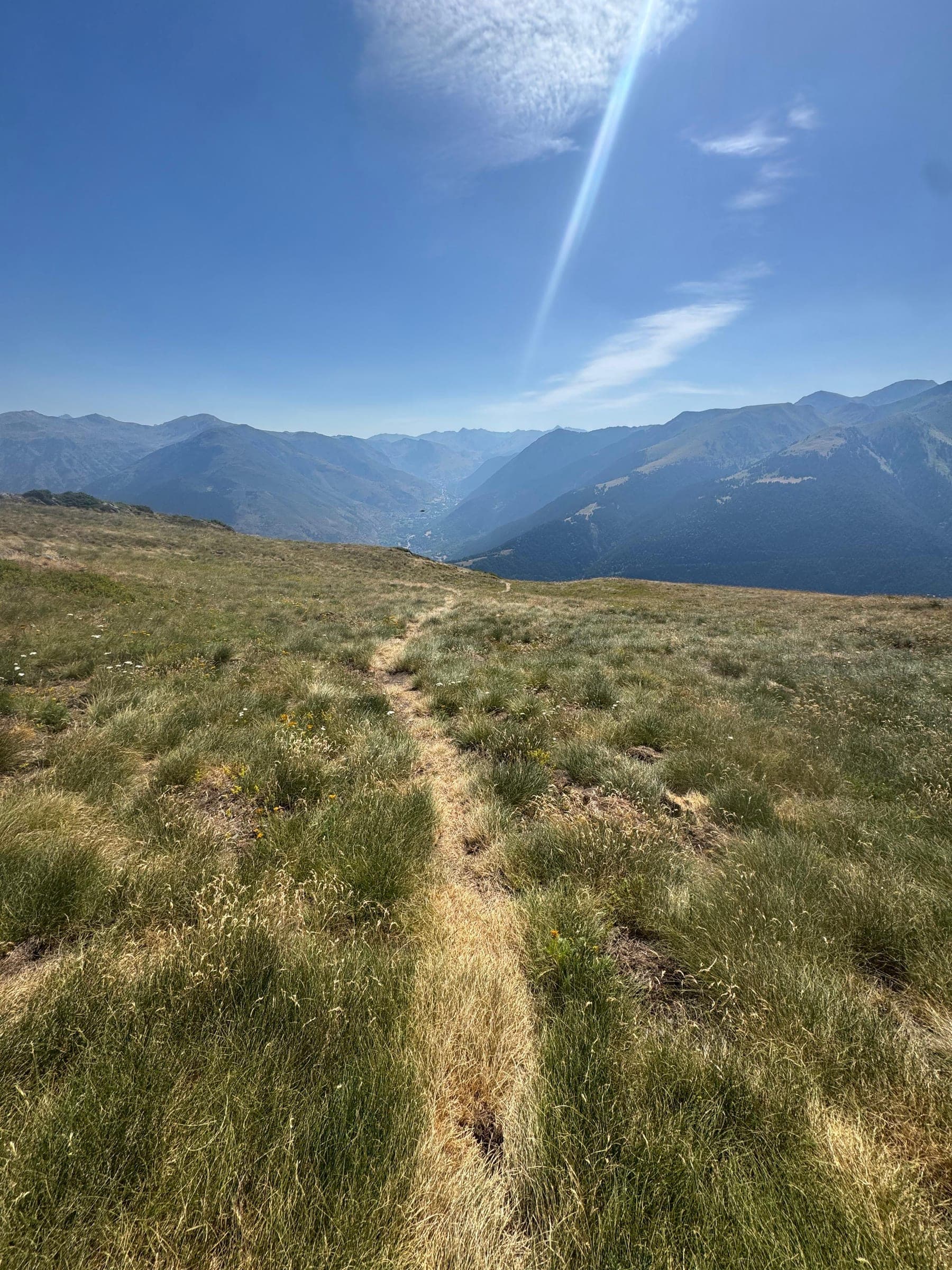
They're not majestic 4,000-meter peaks, but running among them already feels close to climbing. Few things hook me the way moving fast and light through the mountains does: covering kilometers of technical terrain, dropping in and out of valleys, feeling held by the mountains. It's the Montpius Skyrace course, run alone. From a place like this, something of mine always stays behind — and I always take something of it with me.